
Evaluate Moz and Majestic Metrics to Benchmark Domain Power, Spot Toxic Backlink Profiles, and Qualify Outreach Targets
In the intricate world of search engine optimization (SEO), understanding various metrics is paramount for gauging a website’s performance and formulating effective strategies. This article will delve into three critical SEO metrics: Domain Authority (DA), Trust Flow (TF), and Citation Flow (CF), explaining their significance in domain and link-building ranking.
Understanding SEO Metrics
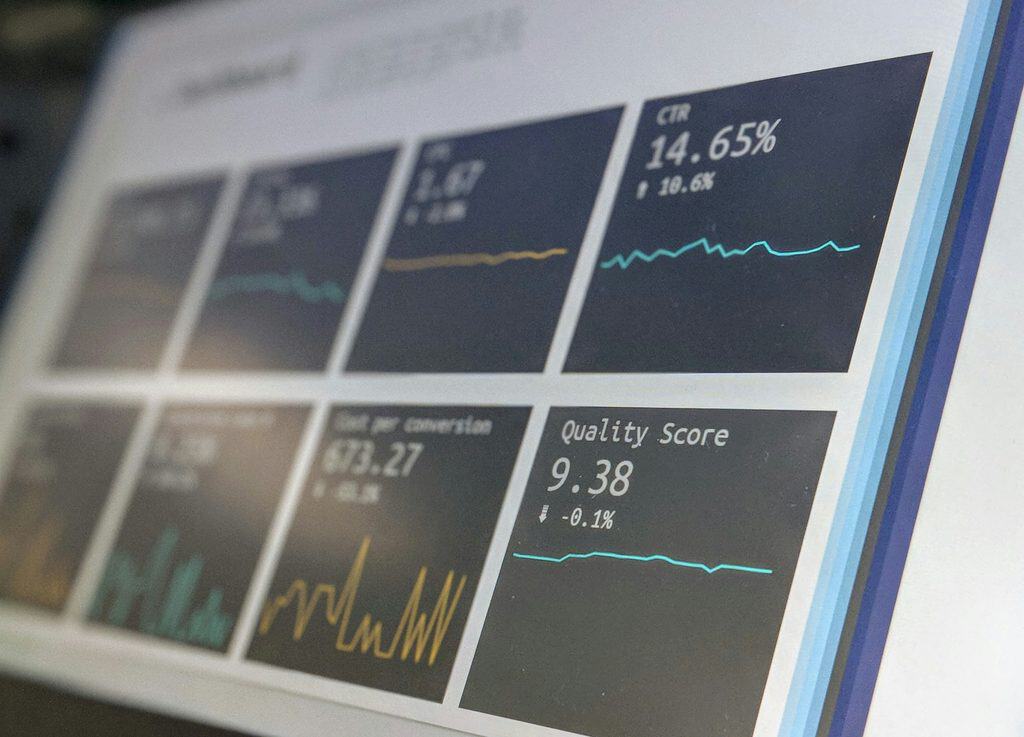
SEO metrics are quantifiable data points that provide insights into various aspects of a website’s performance in search engine results. These metrics help SEO professionals and website owners assess their site’s visibility, organic traffic, backlink profile, and overall authority. By regularly monitoring these metrics, one can identify areas for improvement and adjust their SEO strategies to achieve better search engine rankings. Without understanding these key performance indicators, it’s challenging to make informed decisions about link building and content optimization.
What are DA, TF, and CF?
DA, TF, and CF are crucial SEO metrics that help evaluate a website’s strength and trustworthiness. DA, or Domain Authority, is a metric developed by Moz that predicts how likely a website is to rank in search engine results, with scores ranging from 1 to 100. TF, or Trust Flow, is a metric from Majestic that measures the trustworthiness of a website based on the quality of its backlinks. CF, or Citation Flow, also from Majestic, indicates the influence of a URL based on the number of backlinks it has, irrespective of their quality.
Importance of Domain Authority in SEO
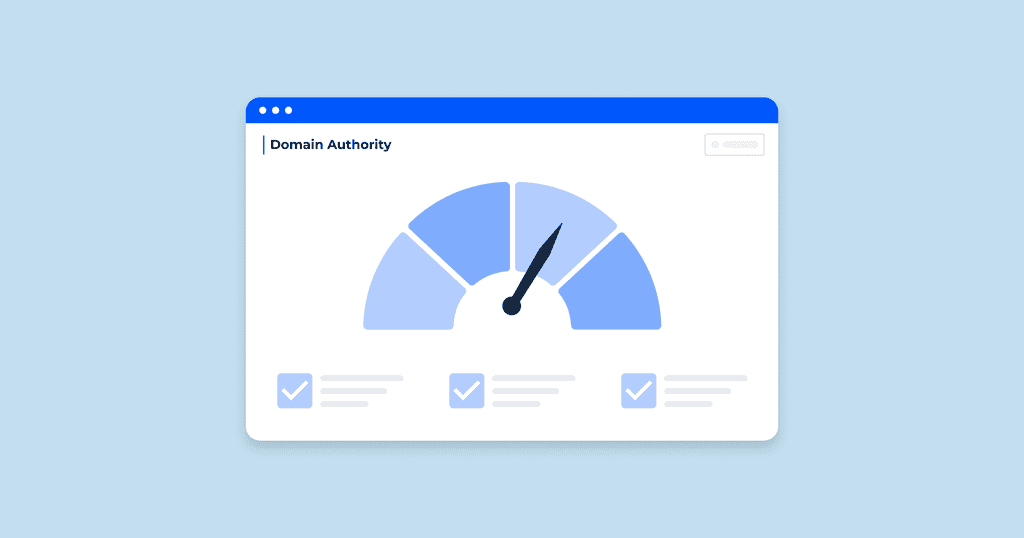
Domain Authority (DA) is a highly influential metric in SEO, serving as a robust indicator of a website’s overall ranking potential. A high DA score, ranging from 1 to 100, suggests a strong backlink profile and authoritative content, making the site more likely to rank well in search engine results. SEO strategies often prioritize increasing DA through quality content creation and strategic link-building efforts. While DA isn’t a direct ranking factor for Google, a higher DA score correlates strongly with better performance in the SERPs, demonstrating the site’s trustworthiness and authority score.
How Trust Flow and Citation Flow Work
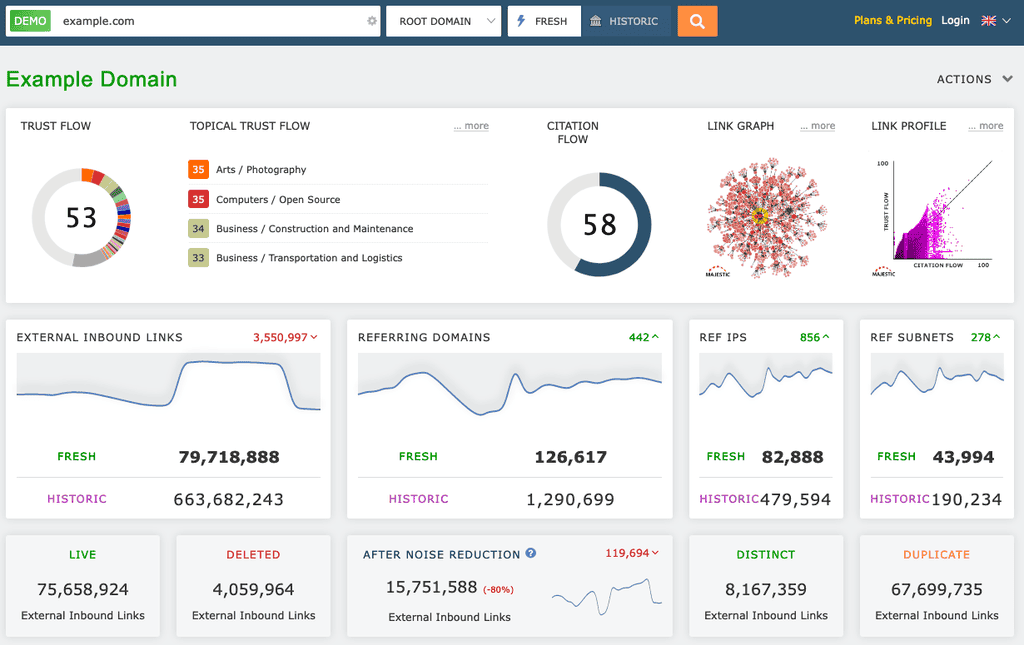
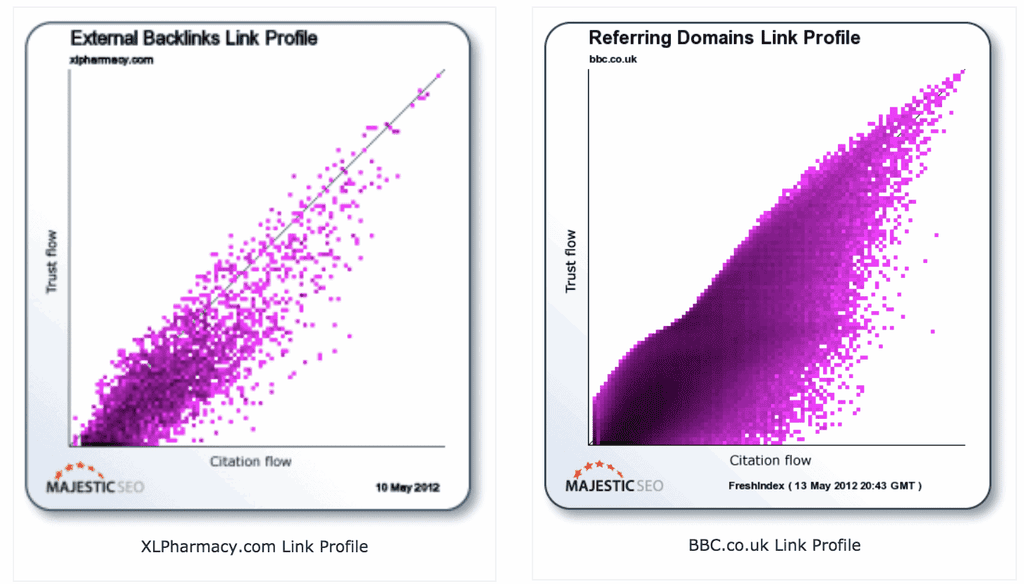
Trust Flow (TF) and Citation Flow (CF) are essential domain metrics provided by Majestic SEO, offering a nuanced view of a website’s backlink profile. Trust Flow measures the trustworthiness of a website based on the quality of its referring domains and backlinks, assessing how close a site is to a list of trusted seed sites. A high TF indicates that a website has many high-quality, authoritative backlinks. Conversely, Citation Flow focuses on the number of backlinks, reflecting the influence of a URL without necessarily considering the quality of those links.
The Role of Domain Metrics in Link Building
Domain metrics play a pivotal role in the success of any robust link-building strategy. These metrics, including Domain Authority (DA), Trust Flow (TF), Citation Flow (CF), and Domain Rating (DR), provide invaluable insights into the quality and authority of potential linking domains. By carefully analyzing these scores, SEO professionals can identify authoritative and trustworthy websites that will contribute positively to their own backlink profile, enhancing their search engine ranking. Without a clear understanding of these domain metrics, link-building efforts can be misdirected, potentially leading to association with low-quality or spammy sites, which can harm SEO performance rather than help it.
Assessing Authority Scores for Effective Link Building
When embarking on link building, assessing the authority score of a prospective linking domain is absolutely critical. Metrics like Domain Authority (DA) from Moz and Domain Rating (DR) from Ahrefs offer a snapshot of a website’s overall strength and influence in the search engine results. A high DA score or a higher DR indicates that a domain has a strong backlink profile, built on quality backlinks from other authoritative sites, and is therefore more likely to pass valuable link equity to your website. Prioritizing links from high-authority domains is a cornerstone of effective SEO strategies, ensuring that your link profile is robust and trusted by search engines.
Understanding Backlink Quality through DA and TF
Understanding backlink quality is fundamental, and metrics like Domain Authority (DA) and Trust Flow (TF) are instrumental in this assessment. While DA provides a general measure of a domain’s overall authority, TF (Trust Flow) from Majestic SEO specifically gauges the trustworthiness of a website based on the quality of its referring domains and backlinks. A high TF indicates that a website has a high number of quality backlinks from trusted sources, suggesting a reliable and authoritative link profile. Conversely, a low TF, even with a high Citation Flow (CF), could signal a reliance on spammy backlinks, making such a domain undesirable for link-building efforts.
How to Use Domain Rating in Your Strategy
Domain Rating (DR), developed by Ahrefs, is another crucial metric that can significantly inform your link-building strategy. Similar to Moz’s Domain Authority, DR assesses the strength of a website’s backlink profile on a scale of 0 to 100, with higher DR scores indicating a more authoritative domain. When conducting outreach for link building, prioritizing sites with a high DR is a smart move, as links from these domains tend to carry more weight and contribute more effectively to your own search engine ranking. Using Ahrefs to identify domains with a high DR or DA ensures that your investment in building backlinks yields maximum SEO benefit, enhancing your website authority and trustworthiness.
Comparing Metrics: DA vs. DR vs. TF vs. CF
When evaluating a website’s SEO strength, relying on a single metric rarely provides the complete picture. Modern SEO professionals use several authority metrics to assess backlink quality, domain strength, and the likelihood of achieving higher search engine rankings. Among the most popular are Domain Authority (DA) by Moz, Domain Rating (DR) by Ahrefs, and Trust Flow (TF) and Citation Flow (CF) by Majestic.
Although these metrics often appear similar, they measure different aspects of a website’s backlink profile and authority. Understanding how DA and DR, along with TF and CF, work together allows you to make smarter SEO decisions, improve your link building efforts, and identify websites that can genuinely strengthen your backlink profile.
It’s also important to remember that these are third-party SEO metrics—they are not official Google ranking factors. Instead, they serve as valuable indicators that help estimate the size and quality of a website’s backlink profile and overall authority.
Differences Between Domain Authority and Domain Rating
Domain Authority (DA) and Domain Rating (DR) are among the most widely used SEO metrics, but they are often misunderstood. While both attempt to estimate a website’s authority, they use different datasets and proprietary algorithms.
What is Domain Authority (DA)?
Developed by Moz, Domain Authority predicts how likely a website is to rank in search engines based on numerous ranking signals.
DA evaluates factors such as:
Number of backlinks
Referring domains
Link quality
Overall link profile
Various machine-learning ranking signals
The score ranges from 1 to 100, with higher scores indicating stronger ranking potential.
Many SEO professionals continue to use Domain Authority when evaluating guest posting opportunities, outreach prospects, and potential link partners.
For example:
DA 20–30 = Growing website
DA 50 = Strong authority website
DA 70+ = Highly authoritative publication
Although a lower DA doesn’t necessarily mean a website performs poorly in Google, it generally indicates a smaller or less established backlink profile.
What is Domain Rating (DR)?
Ahrefs developed Domain Rating to specifically measure the strength of a website’s backlink profile.
Unlike DA, DR primarily focuses on:
Number of referring domains
Authority of linking websites
Distribution of link equity
Overall backlink strength
As with DA, DR is measured on a 0–100 scale, where the higher the DR, the stronger the website’s backlink authority.
Many SEO professionals consider DR particularly useful when evaluating backlink opportunities because it places greater emphasis on link authority.
However, DR isn’t designed to predict rankings directly. Instead, it measures the relative strength of backlinks pointing to a website.
DA vs. DR: Which Is Better?
The ongoing debate over DA or DR often overlooks an important fact—both metrics provide useful information.
| Metric | Best Used For |
|---|---|
| Domain Authority (DA) | Estimating overall website authority and ranking potential. |
| Domain Rating (DR) | Measuring backlink strength and referring domain quality. |
Rather than choosing between DA and DR, successful SEO professionals evaluate both metrics together.
For example:
High DA + High DR = Excellent authority
High DA + Low DR = Strong domain with fewer powerful backlinks
Low DA + High DR = Strong backlink profile but newer or smaller website
Looking at multiple metrics provides a much clearer picture of a website’s actual authority.
The Impact of Trust Flow and Citation Flow on Rankings
While DA and DR focus primarily on authority, Majestic’s Trust Flow (TF) and Citation Flow (CF) evaluate the trustworthiness and influence of backlinks.
These metrics are particularly valuable for identifying high-quality backlink opportunities and avoiding potentially spam-filled websites.
Trust Flow (TF)
Trust Flow measures the quality of backlinks by analyzing how closely a website is connected to highly trusted websites across the internet.
A higher Trust Flow generally indicates:
Strong editorial backlinks
High-authority referring websites
Trusted content
Natural link acquisition
A website with a high TF typically has earned quality backlinks rather than acquiring large numbers of low-quality links.
Citation Flow (CF)
Citation Flow measures the quantity and influence of backlinks regardless of quality.
High CF usually means:
Large number of backlinks
Strong link popularity
Significant external references
However, TF doesn’t always increase alongside Citation Flow.
For example:
TF 45 / CF 50 = Excellent backlink profile
TF 15 / CF 60 = Potential quality concerns
TF 10 / CF 80 = Possible spam indicators
A high CF combined with a low TF may suggest an unnatural backlink profile or excessive low-quality links.
Why TF and CF Matter
Understanding both metrics helps determine the quality of your links rather than simply counting them.
Healthy backlink profiles typically show:
Balanced TF and CF
Natural growth
Trusted referring domains
Minimal spam links
These indicators are especially valuable when evaluating guest post opportunities or purchasing an expired domain, where historical backlink quality is critical.

Choosing the Right Metrics for SEO Success
No single SEO metric tells the entire story.
The most successful SEO campaigns combine multiple authority measurements with real-world performance data.
Use Multiple Metrics Together
Instead of relying solely on one score, use professional SEO tools and metrics collectively when evaluating websites.
A comprehensive evaluation should include:
Domain Authority (DA)
Domain Rating (DR)
Trust Flow (TF)
Citation Flow (CF)
Organic traffic
Referring domains
Keyword rankings
Combining these data points gives a much more accurate understanding of a website’s authority.
Verify Metrics with Google Search Console
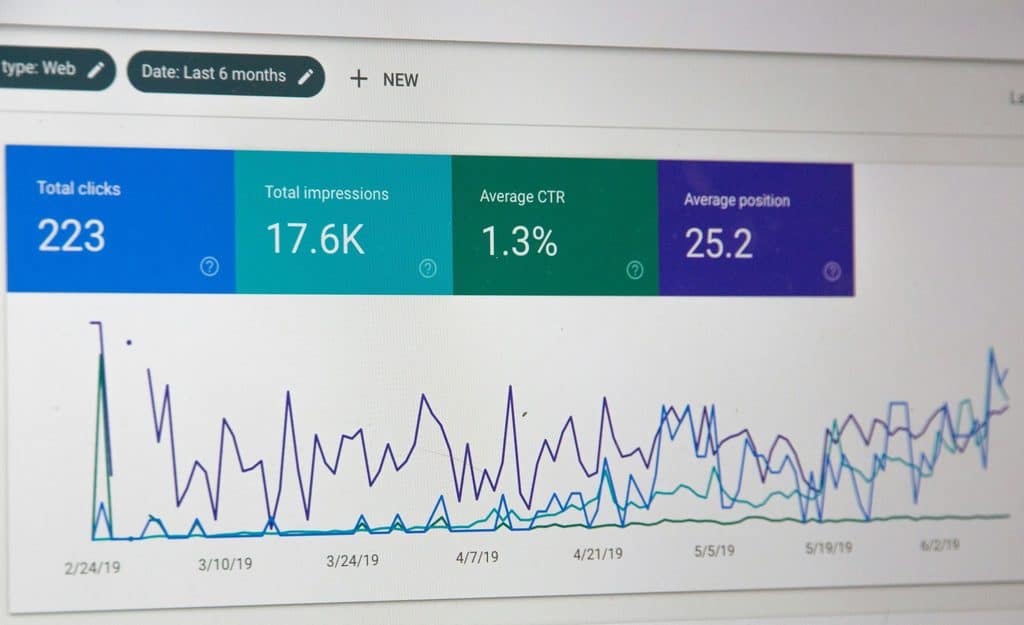
While third-party tools estimate authority, Google Search Console provides first-party insights into your website’s actual search performance.
Use Search Console to monitor:
Organic clicks
Search impressions
Indexed pages
Search queries
These metrics complement authority scores by showing how Google actually views your website.
Analyze Backlinks with Professional SEO Tools
Professional SEO platforms make evaluating authority significantly easier.
Popular tools include:
Ahrefs Site Explorer
Moz Link Explorer
Majestic
Semrush
Google Search Console
Many professionals also use the Site Explorer feature in Ahrefs to examine backlinks, anchor text, and including linking root domains, allowing for detailed competitor research and backlink analysis.
Focus on Quality Over Numbers
One of the biggest misconceptions in SEO is assuming that simply obtaining higher authority scores guarantees better rankings.
In reality:
A high authority website with irrelevant backlinks provides limited value.
A smaller niche website with excellent topical relevance may outperform larger competitors.
Strong editorial backlinks often outweigh dozens of weak links.
Whether you’re evaluating websites based on DR, DA, TF, or CF, always prioritize relevance, trustworthiness, and backlink quality over raw numbers.
Although third-party authority metrics continue evolving, they still matter because they provide valuable guidance for outreach, competitor analysis, and backlink evaluation. Used correctly, DA, DR, TF, and CF help identify authoritative websites, improve your link building efforts, and build a healthier backlink profile that supports long-term SEO success.

Tools for Measuring SEO Metrics
Using Moz for Domain Authority and Page Authority
When assessing a website’s strength and potential in search engine results, Moz offers indispensable metrics like Domain Authority (DA) and Page Authority (PA). DA, a highly recognized metric, predicts how likely an entire domain is to rank, with scores ranging from 1 to 100, while PA specifically evaluates the ranking potential of individual pages. These metrics, developed by Moz, are crucial for any robust SEO strategy, providing an authority score that guides link-building efforts. By leveraging the Moz SEO tool, users can efficiently analyze their own site’s DA and PA, as well as those of competitors, to inform content optimization and the acquisition of high-quality backlinks.
Analyzing Metrics with Ahrefs
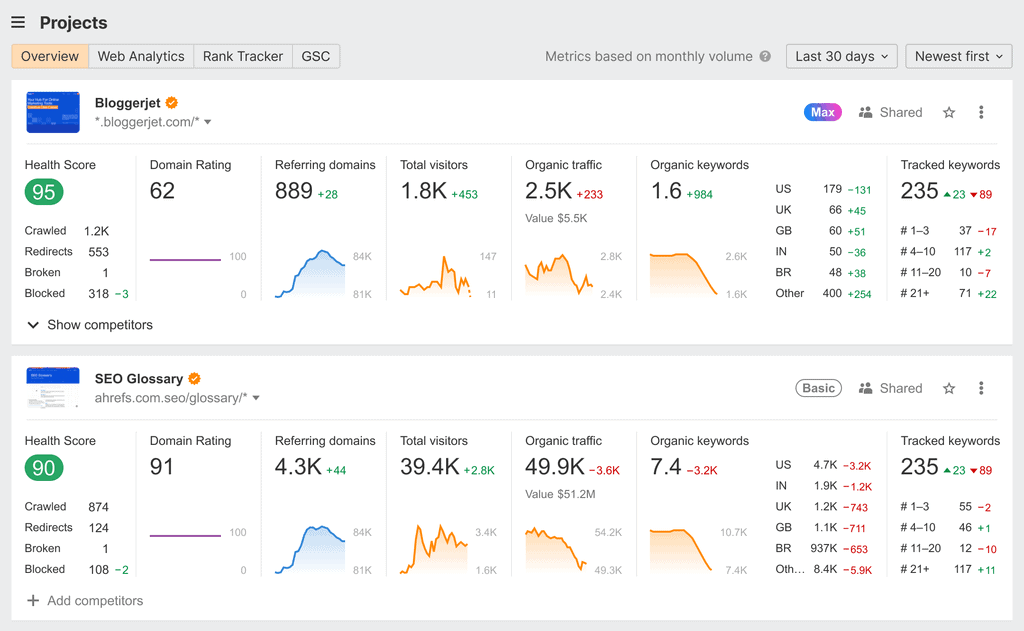
Ahrefs is a powerful SEO tool renowned for its comprehensive suite of metrics, especially its unique Domain Rating (DR) and extensive backlink analysis capabilities. DR, developed by Ahrefs, assesses the strength of a website’s backlink profile on a scale from 0 to 100, providing an authoritative measure comparable to Moz’s Domain Authority. This metric is invaluable for understanding a website’s overall strength and its potential for search engine ranking. Ahrefs also allows users to delve deep into a website’s backlink profile, identify referring domains, and pinpoint opportunities for acquiring high-quality backlinks. Effective SEO strategies often use Ahrefs to monitor DR, track competitor backlinks, and inform targeted link-building campaigns, ensuring optimal SEO performance.
Exploring Majestic’s Trust Flow and Citation Flow
Majestic SEO provides two critical domain metrics: Trust Flow (TF) and Citation Flow (CF), which are essential for evaluating the trustworthiness and influence of a website’s backlink profile. Trust Flow (TF) measures the quality of backlinks, indicating how close a site is to a list of trusted seed sites. A high TF suggests a strong, high-quality backlink profile built on reputable referring domains. Citation Flow (CF), on the other hand, quantifies the number of backlinks, irrespective of their quality, reflecting a website’s overall influence. These metrics like TF and CF are vital for assessing link-building opportunities and avoiding spammy backlinks. By utilizing Majestic, SEO professionals can gain deep insights into a domain’s link profile, helping to build trust and improve search engine ranking.
Best Practices for Improving Your Domain Metrics
Strategies for Building High-Quality Backlinks
Building high-quality backlinks is arguably one of the most impactful strategies for improving a website’s domain metrics, including its Domain Authority (DA), Trust Flow (TF), and Domain Rating (DR). Effective link-building efforts focus on acquiring backlinks from authoritative and trustworthy referring domains that boast high DA, high DR, or high TF scores. This involves creating compelling, quality content that naturally attracts links, engaging in targeted outreach to relevant websites, and leveraging digital PR techniques. Prioritizing quality over quantity in backlink acquisition ensures that your link profile contributes positively to your authority score and search engine ranking, helping to avoid spammy backlinks that could harm your SEO.
Optimizing Your Website for Better Authority Scores
Optimizing a website for better authority scores, such as a higher DA or a higher DR, involves a multi-faceted approach extending beyond just link building. It encompasses ensuring technical SEO soundness, producing high-quality content that engages users and search engines alike, and maintaining a healthy internal link structure. Regular content optimization, including relevant keyword usage and user experience improvements, can significantly boost a site’s perceived value and trustworthiness. Furthermore, a clean backlink profile, free from spammy or low-quality backlinks, is paramount. By consistently working on these elements, a website can gradually enhance its domain authority score, leading to improved search engine ranking and overall SEO success.
Staying Updated with Changes in SEO Metrics
The landscape of SEO metrics is constantly evolving, making it crucial for digital marketers and website owners to stay updated with changes in metrics like DA, TF, CF, and DR. Search engines frequently refine their algorithms, which can impact how these third-party metrics are calculated and how they correlate with search engine results. Subscribing to industry news, participating in SEO forums, and regularly consulting resources from providers like Moz, Ahrefs, and Majestic SEO are essential practices. Staying informed helps in adapting SEO strategies, ensuring that link-building efforts remain effective, and that optimization practices continue to contribute positively to a website’s authority score and search engine ranking.
