


Master Strategic Anchor Ratios, Natural Keyword Distribution, and Contextual Link Placement to Protect and Boost Rankings
Understanding and effectively utilizing anchor text is a cornerstone of any successful SEO strategy. This guide will delve into the nuances of anchor text, its critical role in search engine optimization, and best practices for optimizing it to enhance your link building efforts.

Understanding Anchor Text
What is Anchor Text?
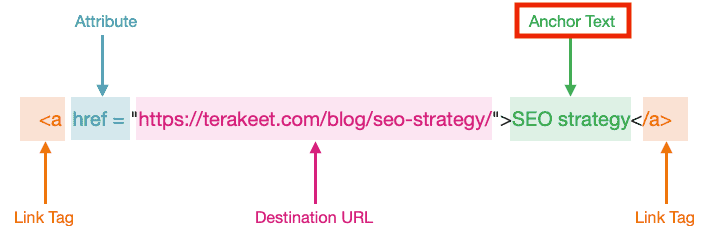
Anchor text refers to the clickable text in a hyperlink. It is the visible, clickable text in a hyperlink that users click on to navigate to another web page. This crucial element gives users and search engines context about the content of the destination page. When you create a link to your content, the specific words you choose for the anchor are incredibly important, as they act as a signpost for what lies beyond the click. It’s not just any text; it’s the specific text in a hyperlink that serves as the visual representation of an underlying URL, informing both users and search engine algorithms about the nature of the linked content.
The Importance of Anchor Text in SEO
The importance of anchor text in SEO cannot be overstated, as it plays a significant role in helping search engines understand the context and relevance of the linked page. Search engines use anchor text as a ranking signal, using the words within the anchor to determine the topic of the page being linked to. Well-optimized anchor text helps search engines categorize your content more accurately, contributing to higher rankings for relevant keywords. It’s a vital component of your overall link building strategy, influencing how your website’s pages are perceived in terms of topic authority and relevance, making it critical for effective link building.
How Anchor Text Looks in Links
Visually, anchor text is the underlined, often blue, text that users can click on to follow a hyperlink. For instance, if you see the words “learn more about SEO” and these words are highlighted and clickable, then “learn more about SEO” is the anchor text. This clickable text is what typically differentiates a regular phrase from a link within a body of content. The visual representation signals to users that it is an interactive element, inviting them to click on the link to access additional information. This clear presentation ensures that the hyperlink stands out, making the user experience intuitive and guiding them through the website.
Types of Anchor Text
Different Types of Anchor Text
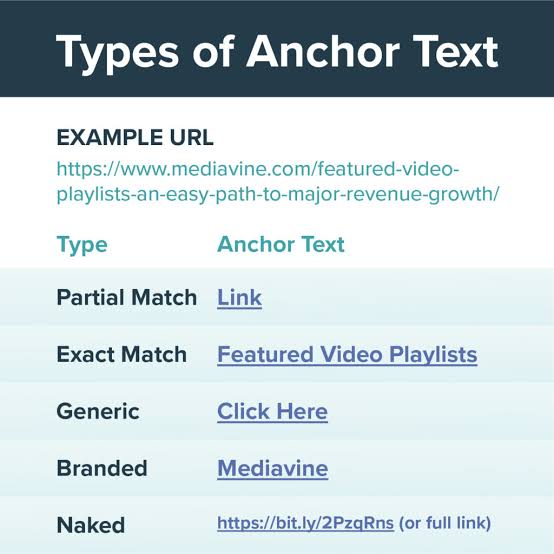
There are several types of backlinks and anchor texts, each serving a distinct purpose in your link building strategy and contributing differently to your link profile. Understanding these various types is crucial for creating a diverse and effective anchor text distribution. The main types include exact match anchor, partial match anchor, branded anchor, generic anchor, and naked URL anchor. Each type of anchor text plays a unique role in SEO and, when used appropriately, can significantly enhance the relevance and authority of your linked pages, making it essential to use anchor text strategically in your link building efforts. A varied mix of anchor text types is often recommended for a natural link profile.
Natural vs. Optimized Anchor Text
The distinction between natural backlinks and optimized anchor text is fundamental for effective link building and maintaining a healthy link profile. Natural anchor text typically occurs organically within content and may include generic phrases, branded terms, or even just the URL itself, reflecting how users might naturally link to content. Optimized anchor text, on the other hand, is deliberately crafted to include specific keywords that the linked page is targeting, such as exact match anchor text or partial match anchor text. While optimized anchor text can directly boost SEO for target keywords, an over-reliance on it can appear manipulative to search engines, potentially leading to penalties. Therefore, the best practices for anchor text suggest a balanced approach, incorporating both natural anchor text and carefully optimized descriptive anchor text.
Examples of Effective Anchor Text
To illustrate the application of different types of anchor text, consider these examples that demonstrate good anchor text practices. For an internal link pointing to a page about “beginner’s guide to SEO,” an exact match anchor could be “beginner’s guide to SEO.” A partial match anchor might be “learn more about effective SEO strategies.” A branded anchor could simply be your company’s name, for instance, “LinkBuild Pro.” A generic anchor could be “click here” or “read more.” Finally, a naked URL anchor would be the direct URL itself, such as “www.example.com/seo-guide.” The key is to use a variety of anchor text types to create a natural link profile and avoid over-optimizing any single type of anchor, especially exact-match anchor text, ensuring your anchor text helps both users and search engines understand the destination.
Best Practices for Using Anchor Text
Anchor text is one of the most influential elements of an effective link-building strategy. Anchor text is the clickable text in a hyperlink that users click to navigate to another webpage. This visible text, also known as anchor text, provides valuable context to both users and search engines about the destination page.
Search engines use link anchor text as a signal to better understand the topic and relevance of the linked page. In fact, anchor text is important because it plays a crucial role in helping search engines evaluate content relevance and determine how a page should rank for specific search queries.
When used correctly, anchor text improves user experience, strengthens your backlink profile, and contributes to better search visibility. However, over-optimizing anchor text can have the opposite effect, making it essential to follow SEO best practices.
How to Optimize Anchor Text for SEO
Creating effective anchor text requires balancing keyword relevance with natural language. Rather than forcing keywords into every hyperlink, focus on making the link text informative, descriptive, and helpful.
Understand What Anchor Text Is
Simply put, anchor text is the clickable portion of a hyperlink. The text is the clickable text that users see before selecting a link.
For example:
Learn more about technical SEO
Complete guide to keyword research
Best backlink-building strategies
Each example clearly describes the page users will visit.
Use Descriptive Anchor Text
Instead of generic phrases like:
Click here
Read more
Visit this page
use descriptive phrases that accurately explain the destination page.
Descriptive anchor text helps users understand where the link leads and gives search engines additional context.
Match the Destination Page
Whenever possible, ensure the anchor text matches the content users will find after clicking.
Every anchor link should link to a relevant page that fulfills the user’s expectations.
For example:
“Complete SEO checklist” should point to an SEO checklist.
“Backlink audit guide” should lead to a backlink audit article.
This improves user experience while strengthening topical relevance.
Use Keywords Naturally
Keywords can improve SEO when incorporated naturally.
However, avoid forcing exact keywords into every hyperlink.
Instead, keep your anchor text conversational and relevant to the surrounding content.
Natural language always performs better than obvious keyword stuffing.
Improve User Experience
Ultimately, anchor text helps users navigate your website more effectively.
Well-written anchor text:
Improves readability
Provides context
Encourages clicks
Reduces confusion
A better user experience often leads to stronger SEO performance.
Anchor Text Distribution Strategies
One of the biggest SEO mistakes is relying too heavily on one type of anchor text.
Creating a diverse anchor text profile helps backlinks appear natural while reducing the risk of algorithmic penalties.
Why Diversity Matters
Search engines analyze anchor text and search engine signals together to determine whether backlinks appear natural.
Using only keyword-rich anchors can appear manipulative.
Instead, build a diverse anchor text strategy that includes multiple anchor variations.
Main Types of Anchor Text
Several types of anchor text exist, each serving a different purpose.
Exact Match Anchor Text
An exact match uses the precise keyword you’re targeting.
For example:
Backlink Building Guide
Here, anchor text is an exact match for the target keyword.
While effective, exact-match anchor text can appear manipulative if overused.
Partial Match Anchor Text
Partial match anchors contain variations of the target keyword.
Example:
Learn more about building quality backlinks
This approach appears more natural while maintaining keyword relevance.
Branded Anchor Text
Uses your company or website name.
Example:
Backlinks Guru
Branded anchors are essential for creating a natural backlink profile.
Naked URL Anchor Text
The URL itself becomes the clickable text.
Example:
www.example.com
These links help diversify anchor distribution.
Generic Anchor Text
Examples include:
Learn more
Read this guide
Visit the website
While generic anchors have their place, they should not dominate your backlink profile.
Image Anchor Text
When an image is linked, the image’s ALT text often functions as anchor text.
Optimizing image ALT text contributes additional SEO value.

Best Practices for Anchor Text Distribution
Maintaining a balanced anchor text profile helps improve SEO while reducing optimization risks.
Focus on Natural Language
Rather than trying to manipulate rankings, write anchor text that sounds natural within the surrounding sentence.
Don’t Use the Same Anchor Repeatedly
Avoid repeatedly using identical keyword phrases.
If you continually use the same anchor text, search engines may interpret this as an attempt to manipulate rankings.
Instead, vary your wording naturally.
Mix Multiple Anchor Types
A healthy backlink profile typically includes:
Branded anchors
Partial match anchors
Generic anchors
Naked URLs
Exact match anchors (used sparingly)
This creates a diverse anchor text profile that appears organic.
Prioritize Relevance
The anchor text is relevant only when it accurately describes the destination page.
Every backlink should link to your page only if the linked content genuinely supports the surrounding discussion.

Common Mistakes in Anchor Text Usage
Even experienced SEO professionals sometimes misuse anchor text.
Avoid these common errors.
Overusing Exact Match Keywords
One of the biggest mistakes is relying too heavily on exact-match keywords.
Because anchor text is considered a ranking signal, some marketers attempt to manipulate text as a ranking factor by repeatedly using keyword-rich anchors.
However, exact-match anchor text can appear unnatural when overused.
Trying to Artificially Inflate Rankings
Some websites intentionally manipulate anchor text to artificially inflate keyword rankings.
This practice violates search engine guidelines and may result in ranking declines or manual actions.
Using Generic Anchor Text Excessively
Although generic anchors are natural in moderation, overusing phrases such as:
Click here
Read more
This page
provides little SEO value because the link text gives minimal context.
Linking to Irrelevant Pages
Every hyperlink should link to a relevant page.
If users expect one topic but land on unrelated content, trust and engagement suffer.
Poor Context Around the Link
The words text within the surrounding paragraph also help search engines understand relevance.
Ensure the surrounding content naturally supports the destination page.
Why Anchor Text Matters for SEO
Anchor text is crucial because it serves two important audiences:
For Users
Explains where a link leads.
Improves navigation.
Builds trust.
Encourages clicks.
For Search Engines
Search engines use text as a clue to understand the subject of linked pages.
The used in the anchor text words help search engines determine topical relevance and authority.
When optimized correctly:
Anchor text can improve keyword relevance.
Anchor text can boost topical authority.
The quality of your link profile becomes stronger.
Overall SEO performance improves.
Because anchor text is critical, it should always be planned as part of a broader link-building strategy rather than treated as an afterthought.
Getting your anchor text right is essential for building a healthy backlink profile and improving long-term SEO performance. Since anchor text plays a crucial role in helping both users and search engines understand linked content, every hyperlink should use descriptive, relevant, and natural language.
Remember that anchor is when your link provides meaningful context to the destination page. The goal is not simply to optimize keywords, but to improve usability and trust. Anchor text does not include random or misleading phrases—it should accurately reflect the content being linked.
By using a diverse anchor text strategy, avoiding over-optimization, and ensuring every link text naturally supports the destination page, you can strengthen your website’s authority, improve search rankings, and create a google business profile that aligns with modern SEO best practices.

The Role of Anchor Text in Link Building
Effective Link Building Techniques
Effective link building techniques are fundamentally intertwined with the strategic use of anchor text, as the clickable text in a hyperlink significantly influences how search engines perceive the relevance and authority of your linked content. To build high-quality links, it’s not enough to simply acquire backlinks; the anchor text accompanying those links must be optimized to provide clear context and value. When external sites link to your content, ensuring they use descriptive anchor text that includes relevant keywords for the destination page can boost your SEO. This practice, combined with a focus on acquiring links from authoritative and relevant websites, forms the bedrock of an effective link building strategy where the anchor text plays a critical role in SEO by enhancing the perceived relevance of the linked pages.
Internal Linking and Anchor Text
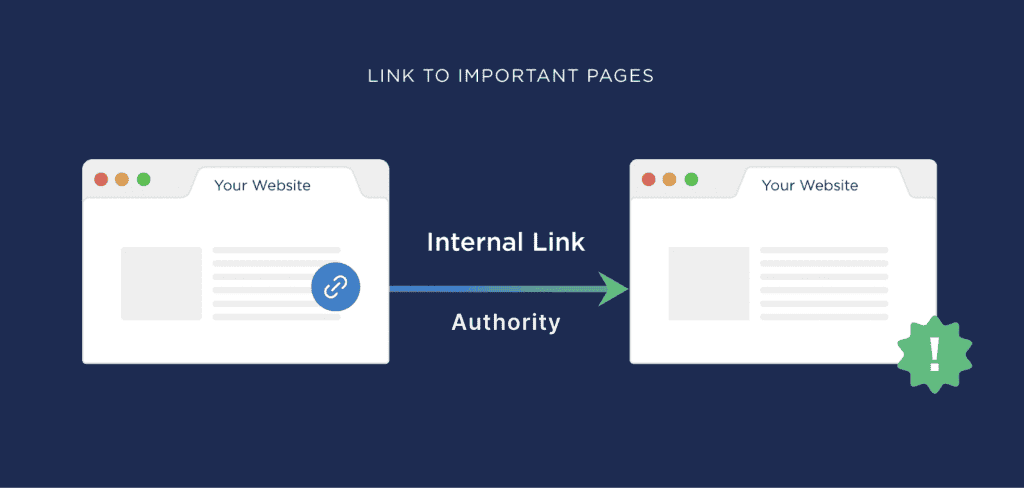
Internal link building, an often-overlooked but crucial aspect of SEO, relies heavily on the strategic use of anchor text to distribute page authority and enhance user navigation within your website. When you create an internal link, the choice of anchor text directly impacts how search engines understand the relationship between your pages and which keywords each page should rank for. Utilizing descriptive anchor text for internal links, rather than generic phrases, provides both users and search engines with a clear indication of the linked content’s topic, thereby improving your site’s overall SEO. A well-executed internal linking strategy with optimized anchor text helps to create a robust internal link profile, strengthening the importance of anchor text for the entire website’s search performance. This strategic use of anchor text helps solidify the relevance of internal links.
Monitoring Anchor Text Performance
Monitoring backlink performance with SEO tools is an essential ongoing task for any comprehensive link building strategy, allowing you to assess the effectiveness of your anchor text choices and identify any potential issues with your anchor text profile. Regularly analyzing the anchor text used in both your internal and external links provides valuable insights into how your content is being perceived by search engines and users. This monitoring helps you ensure a natural link profile, identifying instances of over-optimization, such as an excessive reliance on exact match anchor text, which could potentially harm your SEO. By tracking the various types of anchor text pointing to your pages, you can make informed adjustments to your link building efforts, ensuring that your anchor text continues to play a positive role in SEO and contribute to effective link building.
